
UL FE students contribute to the success of the DBF Edvard Rusjan team
Publication date: 7. 10. 2026Students from the Faculty of Electrical Engineering at the University of Ljubljana (UL FE) play an important role in the DBF Edvard Rusjan team, which competes against more than one hundred university teams from around the world each year at the international Design/Build/Fly competition. Their electrical engineering expertise is an essential part of the development, construction and testing of the competition aircraft, which has already won first place three times.
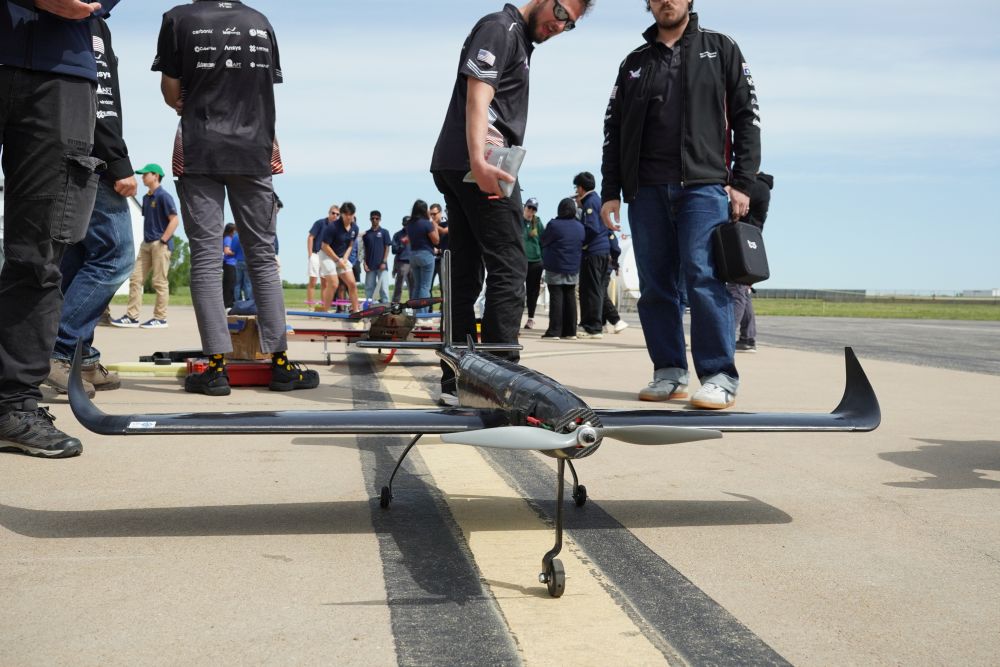
The DBF Edvard Rusjan team brings together students from a range of disciplines, from mechanical and electrical engineering to computer science and other fields. Together, they develop, build and test radio-controlled aircraft with which they compete at the prestigious Design/Build/Fly competition in the United States. The team is named after Slovenian aviation pioneer Edvard Rusjan, whose work on the first Slovenian aircraft was driven by the same kind of curiosity and desire for progress that motivates the students today.
From an idea to a competition aircraft
The competition season begins in September with the publication of the rules and requirements for the new competition. These change every year and define the flight missions that teams must successfully complete. This is followed by several months of design, simulation, engineering, manufacturing and testing. By the end of February, the team must submit an extensive technical report, while the project concludes in April with the competition in the United States.
To carry out such a complex project, the team is organised into seven sub-teams: simulation and testing, aerodynamics, CAD, CAM, construction, electronics, and finance and public relations. The process begins with simulations, where the team analyses the competition missions and tests more than one million different configurations. Based on the results, they determine the optimal strategy and the basic characteristics of the aircraft. The aerodynamics team then develops the design in greater detail, the CAD team prepares the digital model, the CAM team manufactures the required components and moulds, and the construction team uses them to build the physical aircraft.
The indispensable role of electrical engineering
An important part of the development is carried out by the electronics sub-team, which consists of UL FE students. Its task is to ensure that the aircraft’s electrical and electronic systems operate reliably and are properly prepared for the demanding conditions of competition flying. The students therefore manufacture the electrical connections for the avionics, including connections for the control-surface servomotors, sensors, main motor and radio receiver battery. They are also responsible for the propulsion system, which includes a brushless AC motor, an electronic speed controller (ESC) and a battery connected through a 100-amp fuse. All systems are then integrated into the aircraft and prepared for testing and flight.
The work of UL FE students is not limited solely to connecting electrical components. In cooperation with the simulation sub-team, they also carry out measurements and tests to verify the assumptions used in simulation models. An important part of their work therefore involves collecting experimental data that enables the team to make better decisions during aircraft development.
Measurements that can decide the result
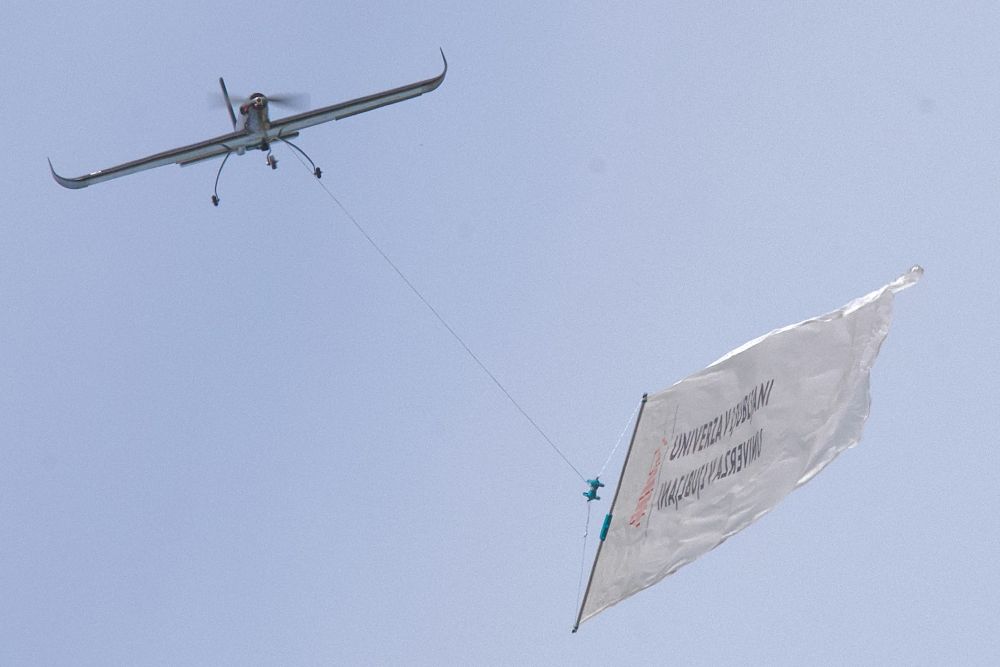
A good example of the importance of electrical engineering expertise was the third competition mission at this year’s event. The objective was to complete as many laps as possible while towing the longest possible flag. Since a longer flag creates greater aerodynamic drag, resulting in lower speed and fewer completed laps, the team had to find the optimal balance between flag length and the number of laps.
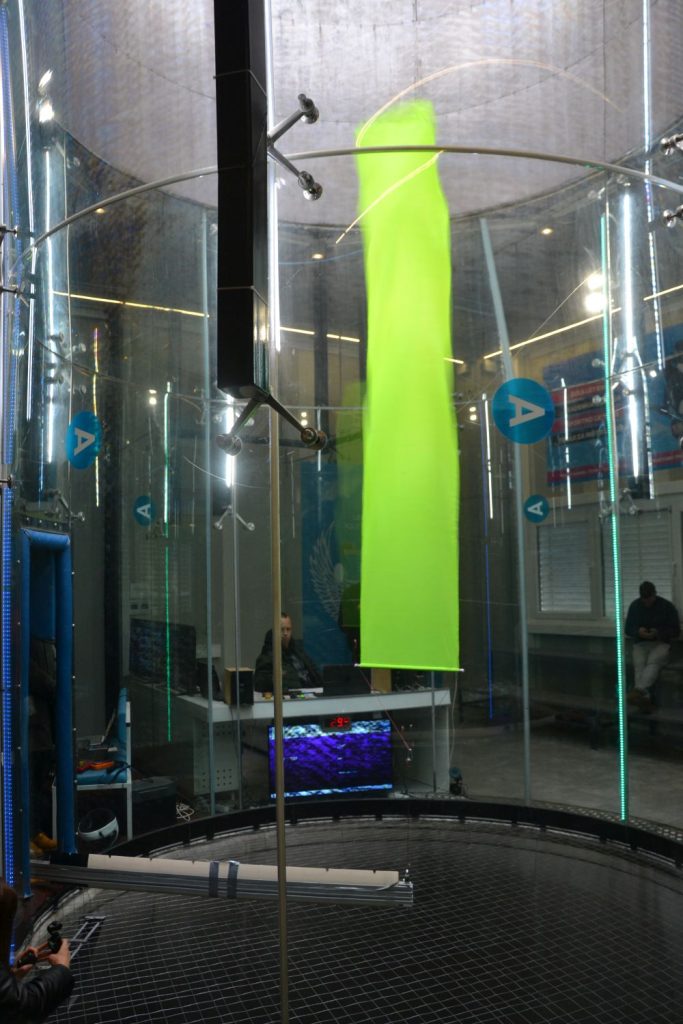
UL FE students, in cooperation with students from the UL Faculty of Mechanical Engineering, therefore carried out measurements on different flag materials. At the Aerodium wind tunnel in Logatec, they measured their drag coefficients and compared seven materials of identical dimensions. The results allowed the team to select the material best suited for competition use.
Energy consumption presented another important electrical engineering challenge. Since the batteries had to be pushed close to their limits during the third mission, the electronics sub-team tested all competition batteries. This provided data on their discharge curves and actual capacities. The information helped the team make decisions during the flight, while also enabling them to validate simulations and select the combination of flag length and number of laps that would produce the highest possible score while still allowing for a safe landing.
From system development to a role at the competition
Electrical engineering students also take on responsible roles within the wider team. Viktor Primožič Gogala, head of the electronics sub-team, was responsible not only for planning electrical connections and selecting batteries, but also for leading electronics-related projects that improved work in the workshop and during test flights. At the competition in the United States, he also took on the role of the pilot’s assistant, or spotter: he ensured that the aircraft was ready before each mission, assisted the pilot with orientation during the flight and monitored battery consumption.
The contribution of UL FE students therefore goes far beyond the traditional idea of “electronics in an aircraft”. Their work combines electrical system design, measurements, testing, data processing, simulation validation and support during competition missions.
Experience gained beyond the lecture hall
The DBF Edvard Rusjan project allows students to apply the knowledge gained during their studies to the development of a complex, fully functioning system. In doing so, they also encounter challenges that can only be solved through cooperation between different disciplines. The aircraft must simultaneously be aerodynamically efficient, mechanically sound, electronically reliable and powerful enough to complete demanding competition missions.
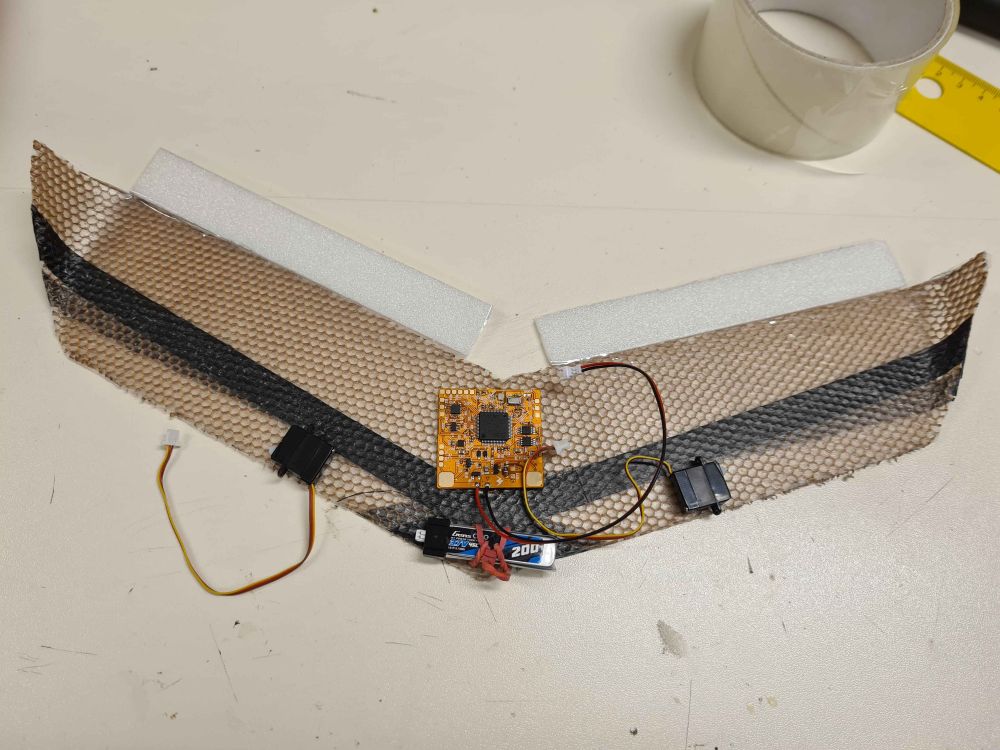
In the 2024/25 season, for example, the third mission had a particularly strong electrical engineering component. It required the launch of a small unmanned glider from the main aircraft. The glider had to fly stably, feature a flashing light and land within a designated area, while its mass was one of the key factors. The electronics sub-team therefore designed its own flight controller printed circuit board, installed the open-source ArduPilot system on it, and integrated it with a GPS module, battery and two servomotors into an exceptionally lightweight system – the entire assembly weighed just 15 grams.
Although unfavourable weather conditions prevented the successful completion of the mission at the time, the example clearly illustrates the breadth of knowledge students gain through the team – from electronic circuit design and programming to system integration and practical testing.
Reaching the top of the world together
The work of students from different faculties has produced outstanding results in recent seasons. This year, the team secured its third victory at the Design/Build/Fly competition with the Brvinc aircraft, once again placing itself among the world’s leading university teams. The success was made possible by a carefully considered design, aircraft optimisation, reliable operation of key subsystems and a well-prepared competition strategy.
The DBF Edvard Rusjan project is therefore much more than a competition to build an aircraft. It is an environment in which students from different disciplines combine their knowledge into a functioning system, learn from one another and search for increasingly better solutions through multiple iterations. UL FE students play an important role in this process – their solutions ensure that the aircraft not only takes off, but also completes demanding competition missions reliably and efficiently.
Related events
Stay up to date

University of Ljubljana, Faculty of Electrical Engineering Tržaška cesta 25, 1000 Ljubljana